Euraseaa Conference 2015: Day 5 July 2, 2015 1033 0 Here is a list of the events scheduled for Friday, July 10th! On the prehistoric cultural relations of Southeast Asia with Northeast India Room: Salle du Lesc F308 MAE Time: 9:30 Chairs: Potshangbam Binodini Devi On this theme, we shall discuss the nature of prehistoric research in Northeast India then we shall explore different
The 15th International Conference of the European Association for Southeast Asian Archaeologists starts on July 6 June 9, 2015 1121 0 Mark your calendars! The 15th International Conference of the European Association for Southeast Asian Archaeologists starts on July 6, 2015-July 10, 2015!The conference will be held at the Université Paris Ouest Nanterre la Défense, Paris, France and is being organized by Bérénice Bellina-Pryce. Registration for the conference is still open, click here to register. If you’re planning on attending
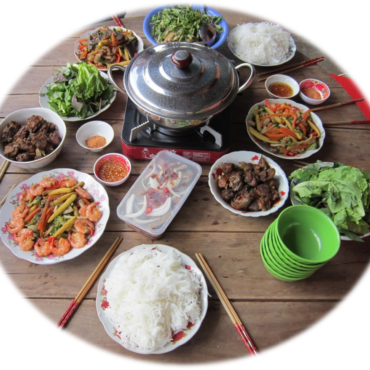
New special issue in the Journal of Indo-Pacific Archaeology is out! May 13, 2015 1194 0 New special issue in the Journal of Indo-Pacific Archaeology is out! Check out the table of contents and abstracts here. Volume 37: Food and Foodways in Indo-Pacific Archaeology Beyond Subsistence: Food and Foodways in Indo-Pacific Archaeology by Michelle S. Eusebio and Amy Jordan “Please Pass the Salt” – An Ethnoarchaeological Study of Salt and Salt Fermented Fish Production,
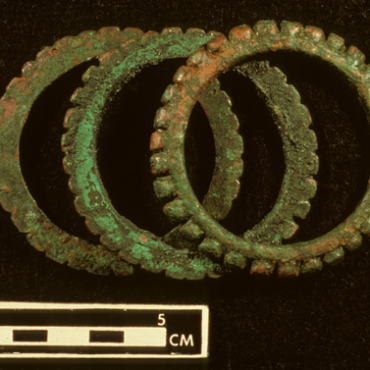
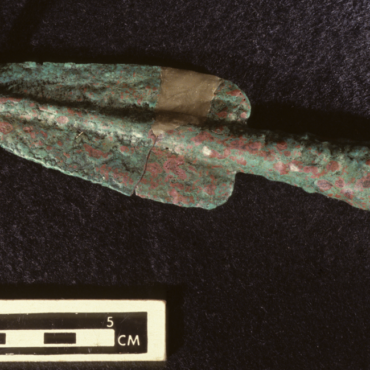
Metals: Discovery of a peaceful bronze age April 29, 2015 2554 0 An outstanding characteristic of the early bronze-using period of Thailand is that societies were peaceful. The association between bronze production and warfare assumed by earlier scholars as characteristic of a typical “Bronze Age” is disproved by Ban Chiang archaeological evidence. This is yet another sign of the unusual nature of this site, as well as
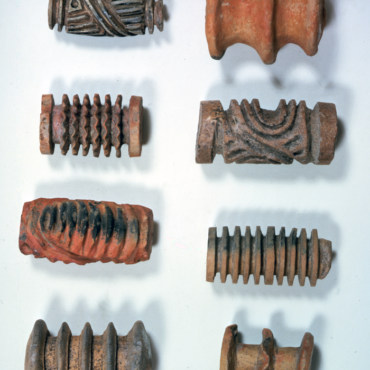
Other Artifacts: Some with mysterious uses April 29, 2015 2512 0 Finds of small artifacts can shed light on activities, interests, and materials used in daily life. The Ban Chiang excavations produced many artifacts of stone (adzes. bangles, and molds), bone (bangles, beads, and awls), clay (spoons, pestles, pellets for shooting small animals with a pellet bow, figurines, bangles, spindle whorls, small cups, and the enigmatic
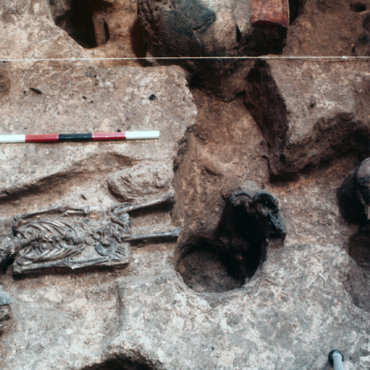
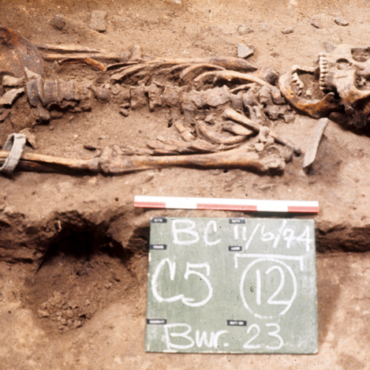
Burials: Rituals that changed over time April 29, 2015 2688 0 The Ban Chiang excavations yielded rich evidence of burial practices that changed over a two-thousand-year span. Much of the evidence about the ancient society unearthed at Ban Chiang comes from the human burials. The 1974 and 1975 excavations at Ban Chiang recovered 142 individuals from burials, documented in situ with associated grave goods. While pottery was by far the most common
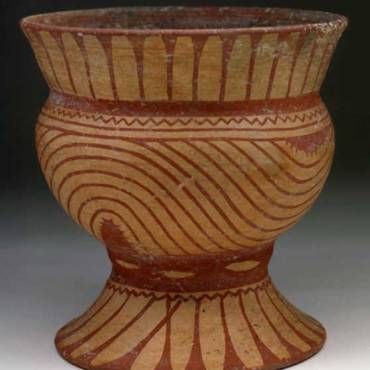
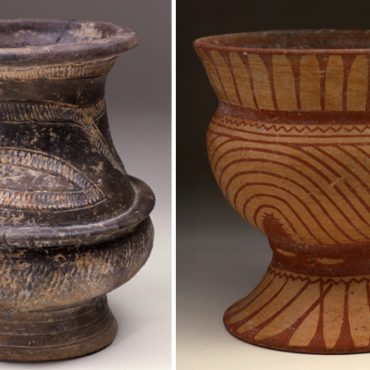
Ceramics: An artistic and technological tradition April 29, 2015 2569 0 The excavations at Ban Chiang uncovered a previously unknown and aesthetically distinctive ceramic tradition. Ceramic production in Ban Chiang actually stretched back nearly 2000 years before the red-on-buff pottery which gave the site its early renown. Known chiefly from pottery found in burials, the ceramics from even the lowest (oldest) levels of excavation exhibit an
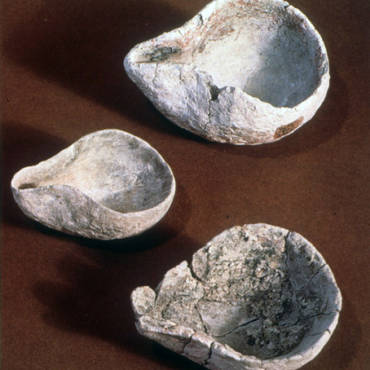
Crucibles: Evidence of sophisticated metallurgy April 29, 2015 2543 0 One find that excited the excavators at Ban Chiang were the small clay crucibles with spouts. It was soon clear that these ordinary-looking artifacts had once been used to melt bronze, copper, and tin to cast objects in molds. But as the crucibles were studied in more detail they had a bigger story to tell: that Ban
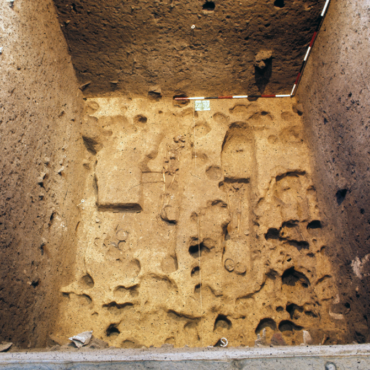
Ban Chiang Chronology April 22, 2015 3046 0 Dating the Ban Chiang cultural tradition has been the subject of controversy and scholarly debate for more than forty years. The excavations in 1974 and 1975 showed that the site had a long stratigraphy and was occupied for thousands of years (Gorman 1976). In the early 1970s, thermoluminescence dates on unprovenienced ceramics suggested, incorrectly, that
Residential Burials April 22, 2015 2623 0 Although Ban Chiang and similar sites in Thailand have been called “cemeteries” for many years, this interpretation has recently been revised. We now think that the dead at Ban Chiang were buried under and around houses that were built on stilts. This practice—found in many societies from the ancient Maya to the Near Eastern neolithic—is
A Distinctive Bronze Age for the Ban Chiang Cultural Tradition April 14, 2015 3388 2 The Ban Chiang excavations revealed a society with distinct differences from the “Bronze Age” society most archaeologists expected. Production in a rural non-hierarchical society: When bronze artifacts were first excavated at Ban Chiang in the mid-1970s, the prevalent “Bronze Age” paradigm was that only socially-stratified societies had the capability to make objects with this alloy.